From Overwhelmed to Effortless: How Route Planning Tools Cleared the Chaos in My Family Life
Imagine standing in your kitchen, coffee in hand, already stressed about the day ahead—school drop-offs, work meetings, grocery runs, and your parents’ anniversary dinner—all tangled in your mind like headphone wires from the 2000s. I was there too, until I discovered that the real game-changer wasn’t more time or superhuman focus, but something quietly powerful: smart route planning tools. They didn’t just map directions—they reorganized my thinking, calmed my mornings, and gave me back hours I didn’t know I’d lost. This isn’t about fancy gadgets or complicated apps. It’s about how a simple shift in how I plan my day transformed not just my schedule, but my peace of mind.
The Daily Juggle: When Life Feels Like a Traffic Jam
Let’s be honest—most of us didn’t sign up for this kind of chaos. I remember one Tuesday morning like it was yesterday. My youngest was searching for a missing shoe, my oldest was asking for help with a last-minute project, and I was trying to remember if I’d scheduled the vet appointment for the dog. Meanwhile, my phone buzzed with a calendar alert: “Meeting at 9:30 a.m.” I glanced at the clock. 8:17. And I hadn’t even left the house. That morning, like so many others, felt like I was running a relay race where no one had told me the rules.
It wasn’t just the physical rush that wore me down. It was the constant mental load—the invisible checklist running in the background of my brain, ticking off every task, every deadline, every “don’t forget.” I’d lie in bed at night replaying the day, wondering if I’d remembered to sign the permission slip or if I’d double-booked the dentist for both kids. The stress wasn’t just about being busy. It was about feeling like I was always one missed turn away from total meltdown.
And I know I’m not alone. So many of us—mothers, caregivers, working professionals trying to balance it all—carry this weight every single day. We’re not lazy. We’re not disorganized by nature. We’re just trying to keep too many balls in the air, and no one ever handed us a net. The truth is, life doesn’t come with a built-in system for keeping everything straight. But what if we could borrow one? What if the tools we already carry in our pockets could do more than check email or take photos? What if they could actually help us breathe a little easier?
The Breaking Point: One Missed School Event Too Many
It took a moment of real heartbreak to make me change. My daughter had been rehearsing for her school’s spring music showcase for weeks. She’d practiced her song every night, proudly performing it for the dog, the houseplants, even the neighbor’s cat. She’d told me over and over, “Mom, you’ll be there, right?” And I promised I would.
But that day, everything went wrong. My meeting ran late. Traffic was worse than expected. I had to stop for gas, then realized I’d forgotten the cupcakes for the class party. By the time I pulled into the school parking lot, the performance was over. I walked into the auditorium just in time to see her sitting in the front row, her face falling when she saw me. “You missed it,” she said quietly. Not angry. Just disappointed. And that broke me.
I drove home in silence, tears mixing with the rain on the windshield. It wasn’t just about one event. It was about the pattern—the missed moments, the broken promises, the guilt that piled up like unread emails. I knew I couldn’t keep living this way. I didn’t need more willpower. I needed a better system. That night, I started searching for anything that could help me stay on track—something that could take the mental load off and keep me where I needed to be, when I needed to be there. And that’s when I discovered the real power of smart route planning.
Discovering the Tool That Changed Everything
I won’t lie—I was skeptical at first. I’d used GPS before, of course. But I thought of it as just a way to avoid getting lost. I didn’t realize it could do so much more. Then a friend mentioned how she uses Google Maps with her daily routines. “It’s like having a co-pilot,” she said. “It knows where I need to go before I do.” I rolled my eyes—until I tried it.
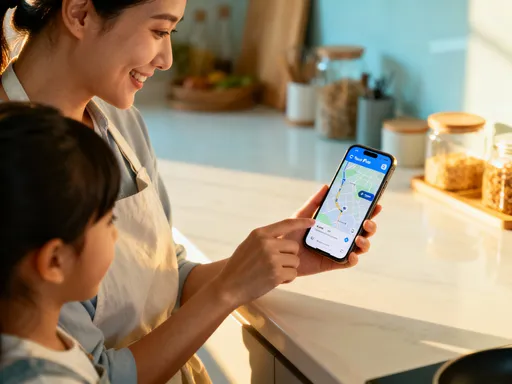
I started small. I set up a morning routine: home → school drop-off → coffee shop → office. I enabled location sharing and synced it with my calendar. The first time the app reminded me to leave 15 minutes earlier because of traffic, I almost didn’t believe it. But I listened. And I arrived early. No rushing. No panic. No forgotten backpacks. That small win felt huge.
Then I added more. Grocery runs. After-school pickups. Even weekend plans. The app began to learn my patterns. It started grouping errands by location—suggesting I pick up dog food while I was already near the pet store on my way home from yoga. It sent gentle notifications: “Leave now to make your 3 p.m. appointment on time.” It even adjusted for weather delays. I wasn’t just following directions anymore. I was being guided—calmly, wisely, without the mental strain.
The shift wasn’t just logistical. It was emotional. For the first time in years, I felt like I was in control. Not because I’d become more disciplined, but because I’d stopped trying to do it all in my head. This wasn’t about replacing human judgment. It was about giving my brain a break so I could show up as the mom, the partner, the person I wanted to be.
How It Works: Simplicity Behind the Smarts
You might be thinking, “That sounds great, but I’m not tech-savvy.” I get it. I’m not either. I don’t code. I don’t even know what an algorithm is, really. But here’s the beautiful thing: you don’t need to. These tools are designed to work quietly in the background, like a thoughtful assistant who already knows your week before you do.
Here’s how it actually works, in plain terms. When you sync your calendar with an app like Google Maps or Apple Maps, it starts to see your schedule—your meetings, your kids’ practices, your doctor’s appointments. It also learns your regular routes—like your commute or your usual grocery store. Then, using real-time data (like traffic, weather, and road closures), it calculates the best time to leave and the fastest way to get there.
But it goes further. If you have multiple stops, it can reorder them by location—so you’re not zigzagging across town. This is called “route optimization,” but you don’t need to remember that term. Just know it means fewer miles, less gas, and less stress. And the best part? It updates in real time. If there’s a backup on the highway, it reroutes you instantly. If you’re running late, it adjusts the schedule and tells you when to leave for the next stop.
It also sends smart reminders. Not just “You have a meeting at 2 p.m.,” but “Leave in 10 minutes to arrive on time, considering current traffic.” These aren’t pushy alerts. They’re gentle nudges—like a friend saying, “Hey, don’t forget, you’ve got something important coming up.” And because it’s all connected to your phone, it works whether you’re walking, driving, or taking public transit.
Ripple Effects: Calmer Mornings, Happier Kids, Stronger Connections
The changes didn’t stop at being on time. The real magic happened in the moments between the tasks. Mornings used to be tense—yelling about shoes, rushing through breakfast, snapping at the kids because I was stressed. Now? We move at a different pace. I leave earlier, so we’re not in a rush. The kids have time to finish their cereal. We listen to their favorite songs on the way to school.
One morning, my daughter looked up from her book in the backseat and said, “Mom, we’re not late today.” I smiled. “No, sweetie. We’ve got time. Want to finish the chapter?” That moment—small, quiet, ordinary—meant everything. It wasn’t just about arriving on time. It was about arriving present.
The kids noticed the difference too. “You’re not yelling in the car anymore,” my son said one day. Ouch. But true. When I’m not frantic, I’m more patient. When I’m not worried about being late, I can actually listen. We talk more. We laugh more. We’re less reactive. And that has strengthened our connection in ways I didn’t expect.
Even my husband noticed. “You seem lighter,” he said. “Like you’re not carrying the whole world on your shoulders.” And he was right. By letting a simple tool handle the logistics, I freed up mental space to be more emotionally available. That’s the hidden benefit of smart planning—it doesn’t just save time. It saves your energy, your mood, your relationships.
Beyond the Family: Gaining Time for Myself
Here’s something I didn’t anticipate: all those little time savings added up. Ten minutes here, fifteen there. Minutes I used to spend circling the block looking for parking or backtracking across town for forgotten errands. Now, I have them back. And I’ve started using them for me.
I’ve returned to journaling in the mornings. I go for walks without checking my phone every two minutes. I even started painting again—something I hadn’t done since college. It’s not about being productive. It’s about feeling like a whole person, not just a scheduler-in-chief.
One Saturday, I sat on the porch with a cup of tea, watching the rain, and realized I wasn’t thinking about the next task. I was just being. And that felt like a luxury. These tools didn’t give me more hours in the day, but they gave me back my focus. They helped me stop living in constant reaction mode and start living with intention.
Self-care isn’t just bubble baths and face masks (though I love those too). It’s about creating space in your life so you can breathe, think, and feel. And sometimes, the most powerful self-care tool isn’t something you buy at a spa. It’s something you already have in your pocket—waiting to be used wisely.
Making It Work for You: Simple Steps to Start Today
If you’re feeling overwhelmed, I want you to know—change doesn’t have to be complicated. You don’t need to overhaul your entire life. You just need to start small. Pick one part of your routine that feels chaotic. Maybe it’s the morning school run. Maybe it’s your weekend errands. That’s your starting point.
Open your map app—Google Maps or Apple Maps, whichever you use. Set up a routine. Type in your common stops: home, school, work, grocery store. Turn on location services and calendar sync. That’s it. You’ve just taken the first step.
For the next few days, just follow what the app suggests. Let it tell you when to leave. Let it reroute you if there’s traffic. Notice how it feels to not have to think about the best route. And don’t worry about getting it perfect. If you forget to turn on a setting or miss a notification, that’s okay. This isn’t about being flawless. It’s about progress.
As you get comfortable, add more routines. Try letting the app group your errands by location. See how much time you save. Pay attention to how you feel—less anxious? More in control? That’s the goal. And remember, this isn’t about becoming dependent on technology. It’s about using it as a support system—like a good friend who helps you carry the load.
Over time, you might find, like I did, that these small changes add up to something bigger. You’ll be on time more often. You’ll miss fewer moments. You’ll feel calmer, clearer, more like yourself. And that, my friend, is worth every minute.