Tired of awkward movie nights with friends? This smart setup made ours effortless
You know that moment when everyone’s finally over, snacks are out, and then—chaos. Someone’s fumbling with HDMI cables, another can’t log into the streaming app, and the lights? Still too bright. We’ve all been there. I used to dread hosting movie nights, not because I didn’t love spending time with friends, but because the tech always got in the way. Then we transformed our living room into a smart entertainment space—and everything changed. It wasn’t about fancy gadgets. It was about making time together easier, smoother, and genuinely more joyful.
The Problem: Why Simple Hangouts Feel So Complicated
Remember the last time you had friends over and everything just… worked? No one asked, “Wait, whose phone is casting this?” No one had to get up three times to adjust the volume or fix the picture. No one whispered, “Can we make it darker?” halfway through the film. If that sounds like a fantasy, you’re not alone. For years, I thought the struggle was mine alone—like maybe I just hadn’t figured out the right remote, or I bought the wrong TV. But the truth is, it’s not us. It’s the way most home entertainment systems are built.
They’re designed for solo users, not shared moments. Think about it: your streaming account has one default profile. Your soundbar connects to one device at a time. Your lights don’t know when a movie starts—they just sit there, glaring down like a classroom teacher. And when five people show up with five different preferences, suddenly you’re not hosting a fun night. You’re a tech support volunteer with a bowl of half-melted popcorn in your lap.
I remember one evening when my closest friends came over for a long-planned movie night. We’d been talking about it for weeks—comfort films, homemade cookies, the whole cozy dream. But within ten minutes of pressing play, we were tangled in cords, arguing about which app had the movie, and one of us was crawling behind the couch to plug in a streaming stick. The mood? Not cozy. The vibe? More like a group project gone wrong. That night, I realized something important: technology was supposed to make life easier, but instead, it was stealing our joy.
The irony is, we bought all these smart devices to simplify things. But when they don’t talk to each other, when each one demands attention, they create friction instead of flow. And that friction? It doesn’t just waste time. It pulls us out of the moment. It makes us feel like hosts, not friends. And that’s the opposite of what a home should be—a place where you can relax, not troubleshoot.
The Shift: From Gadget Chaos to Seamless Shared Experiences
The change didn’t happen overnight. It started with a simple question: What if we stopped trying to fix each device—and instead designed the whole experience around how we actually live? That was the turning point. Instead of chasing the newest gadget, I began asking, “What do we *really* do in this space?” The answer was always the same: we gather. We laugh. We share stories. We want to feel comfortable, together.
So I stopped thinking about tech as the star and started seeing it as the stagehand—the one who sets the scene but never steps into the spotlight. The goal wasn’t to impress anyone with voice commands or blinking lights. It was to make the room respond the way a good host would: by noticing, anticipating, and gently supporting the mood.
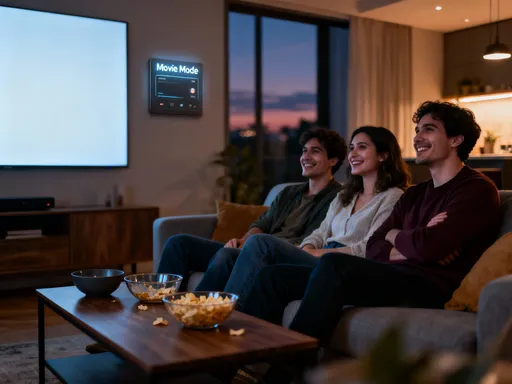
For example, I used to spend five minutes before every movie night dimming lights, closing blinds, and setting up the audio. Now, those steps happen automatically. When I say, “Hey, let’s start the movie,” the system knows what that means. The lights lower, the TV powers on, the soundbar switches to surround mode, and even the thermostat adjusts slightly so no one’s too warm or too cold. It’s not magic. It’s just thoughtful design.
The real shift was emotional. I stopped feeling like I had to manage everything. And my friends stopped feeling like guests who might “break” something. Instead, we all just showed up. No one had to ask, “How do we work this?” because it worked *for* us. That’s the power of designing for people, not products. When technology disappears into the background, what comes forward is connection.
Building It Together: How Friends Shaped Our Smart Space
Here’s a secret: I didn’t build this system alone. In fact, the most important part wasn’t the tech at all—it was the conversation. One afternoon, I invited three of my closest friends over—not to watch a movie, but to help me rethink the space. We sat on the couch with notebooks and asked, “What do we love about being here? What drives us crazy?”
One friend said, “I always feel awkward adjusting the temperature. I don’t want to offend you.” Another admitted, “I never know how to play music without opening five apps.” And my sister joked, “Every time I press a button, something unexpected happens.” That’s when it hit me: this wasn’t just about convenience. It was about comfort, belonging, and ease.
So we started small. We created a shared playlist everyone could add to—no passwords, no logins. We picked a single voice assistant everyone felt comfortable using. And we gave our favorite routine a fun name: “Chill Protocol,” suggested by my friend Lisa during a wine-fueled brainstorm. (She said it sounded like a secret mission to relax.) That silly name made it feel like *our* system, not just mine.
We even designed seating presets. My friend Mark always sits in the corner chair, where the light hits just right. Now, when he arrives, the system recognizes his phone and gently brightens his reading lamp. Another friend, Sarah, loves deep bass, so when she’s here, the sound settings automatically adjust. These aren’t huge changes, but they send a quiet message: “We see you. You belong here.”
That sense of ownership transformed how we used the space. Friends didn’t just come over—they participated. They’d suggest new voice commands, tweak the lighting, or add songs to the playlist. The room stopped feeling like my living room and started feeling like *our* hangout. And that’s when the magic really began.
Routine Integration: Making Technology Disappear Into Daily Life
The most satisfying part of this journey? I barely notice the technology anymore. That’s the goal, right? We don’t want to live in a sci-fi movie where every action requires a command. We want life to flow—naturally, effortlessly.
So we built routines that fit our rhythms. For example, every Friday around 6 PM, when friends usually arrive, the system triggers a “Welcome Home” scene. The front door unlocks (securely, of course), the hallway light turns on, and a soft playlist—curated by all of us—starts playing at low volume. It’s not loud or flashy. It’s warm. It says, “You’re home. Relax.”
Another favorite is “Game Night Mode.” One voice command turns on the TV, switches inputs, cranks up the surround sound, dims the lights to a cozy glow, and even preheats the room by two degrees. No more fumbling with remotes while someone’s setting up the board game. We just say the words, and the room transforms.
And when the night winds down? There’s “Wind Down.” Lights fade slowly. The music shifts to soft jazz or acoustic covers. The TV turns off. The blinds close. It’s like the house is gently tucking us in. These routines didn’t replace our traditions—they enhanced them. We still make popcorn together. We still argue about movie endings. But now, we do it without distraction.
The key was simplicity. We didn’t try to automate everything. We picked the moments that used to slow us down and gave them a quiet solution. And because we used devices that work together—like a smart hub that connects lights, sound, and climate—we didn’t need a degree in engineering to set it up. Just a little patience and a clear vision: make life easier, not busier.
The Emotional Payoff: More Than Convenience—Deeper Connection
You might think the biggest win was saving time. Or not tripping over cords. But the real reward was something deeper: presence. Without the constant little interruptions—“Can you restart the app?” “Is the sound coming from the TV or the speaker?”—we actually started to *be* with each other.
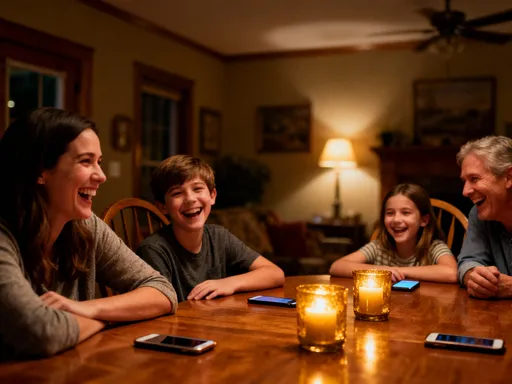
Laughter lasted longer. Conversations went deeper. People stayed an extra hour, not because they had to, but because they wanted to. One friend said, “I feel like I can just *be* here. No pressure, no awkwardness.” That meant more to me than any five-star gadget review.
There’s a quiet beauty in effortless hosting. When you’re not worried about the tech, you can focus on the people. You can notice the way someone’s eyes light up during a funny scene. You can share a knowing glance when a sad moment hits. You can offer a blanket before someone even asks.
And here’s the thing: that kind of care isn’t just emotional. It’s designed. By removing the friction, we made space for the little acts of kindness that make gatherings special. The system didn’t replace hospitality—it amplified it. It gave me the freedom to be a friend, not a technician.
One night, after a long movie, we all just sat in the dark for a few minutes, talking about life, dreams, things we hadn’t shared in years. No one reached for their phone. No one checked the time. We were just… there. And in that moment, I realized: the best technology isn’t the one that does the most. It’s the one that lets us do *less*—so we can be more.
How to Start Small: Simple Steps Anyone Can Take
You don’t need to overhaul your home to experience this. In fact, starting small is better. The goal isn’t perfection—it’s progress. Think about one moment in your gatherings that feels clunky. Is it starting the music? Connecting the TV? Adjusting the lights? Pick one. Solve it.
For example, try setting up a “Welcome” scene using a voice assistant you already own, like Alexa or Google Assistant. Link it to smart bulbs you can find at any store. Program it to turn on a soft light and play a shared playlist when someone says, “Hello, friends are here.” It takes less than 20 minutes and costs less than a nice dinner out.
Or, if tangled speakers are your nemesis, invest in one wireless soundbar that pairs easily with your TV and phone. Make sure it remembers multiple devices, so your friend can quickly switch from their playlist to the movie soundtrack. Look for models with simple voice control—no app needed.
Another easy win: create a shared streaming profile. Name it something fun, like “The Squad” or “Movie Masters.” Add everyone’s favorite shows and movies. That way, no one has to log in or explain their watch history. It’s *yours*—together.
The most important thing? Involve the people who matter. Ask your family or friends what would make them feel more comfortable. Try one idea. See how it feels. Celebrate the small wins. When people experience ease, they’ll naturally want to expand it. But start with one moment. Make it smooth. Let everything else grow from there.
The Bigger Picture: Technology That Serves Relationships, Not Distances
In a world where screens often pull us apart—where we scroll while talking, or watch alone in separate rooms—this smart space does the opposite. It pulls us back together. It doesn’t replace human connection. It removes the things that get in the way of it.
When technology supports shared rhythms, it becomes a quiet force for closeness. It says, “This space is for *us*.” It honors our habits, respects our comfort, and celebrates our togetherness. It doesn’t demand attention. It gives it—back to the people we love.
And that’s the heart of it. We’re not designing smart homes. We’re designing spaces where real life can unfold—easily, warmly, authentically. A place where no one’s distracted by settings or passwords. Where everyone feels welcome, seen, and relaxed. Where joy isn’t scheduled—it just happens.
The best technology doesn’t wow you with flashing lights or complex commands. It doesn’t make you feel behind or confused. It simply fades into the background, doing its job so you can do yours: being present, being kind, being together.
So if you’ve ever felt like tech was stealing your time with loved ones, know this: it doesn’t have to be that way. With a little intention, a few simple tools, and a focus on what really matters, you can create a space where technology serves your relationships—not distances. Where movie nights aren’t stressful, but sacred. Where every “hello” feels like coming home. And where the most advanced feature isn’t in the device—it’s in the connection it helps you keep alive.