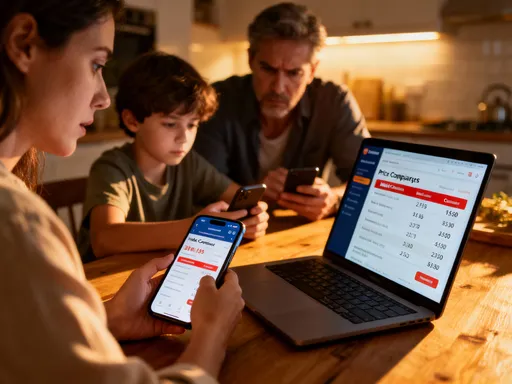
I didn’t realize our family was overspending—until this tool showed us the truth
We’ve all been there—buying groceries, ordering online, comparing prices in our heads, only to realize later we’ve spent more than we should have. As a parent trying to protect my family’s budget and safety, I felt overwhelmed. Then I discovered how simple tech tools could quietly transform our spending habits, protect us from scams, and bring us peace of mind. This isn’t about tracking every penny—it’s about making smarter choices together, without stress. It’s about knowing you’re not being tricked, that your kids are shopping safely, and that your hard-earned money is going further. What started as a small curiosity turned into a game-changer for our home life.
The Moment We Knew Something Had to Change
It wasn’t one big financial disaster that made us stop and rethink how we were managing money. No surprise medical bill, no job loss—just a quiet accumulation of small oversights that, over time, started to feel like a pattern. I remember opening my bank statement one Sunday morning with my coffee, scrolling through the usual mix of grocery runs, gas fill-ups, and streaming subscriptions. Then I saw it: a $15.99 charge from a company I didn’t recognize. I paused. My husband didn’t know it either. Our daughter shrugged and said, 'Oh, that’s for that app I tried last month.'
It turned out she had signed up for a free trial of a drawing app, not realizing it would auto-renew. Easy to fix, right? But that one little charge opened the floodgates. We started digging deeper. Two subscriptions to the same music service. A grocery delivery fee we hadn’t opted out of. A pair of shoes my son bought online that, when I checked the same brand later, was listed at nearly 30% less on another site. None of these were huge on their own, but together, they added up to over $200 a month—money we thought we were saving.
That’s when it hit me: we weren’t just overspending. We were being passive. We trusted that we were being careful, but in reality, we were making decisions in the moment, often tired, distracted, or in a rush. The real problem wasn’t lack of willpower—it was lack of awareness. We needed something that could help us see what we were missing, not just track what we’d already spent. We needed a tool that didn’t just record our choices but helped us make better ones—before we clicked 'buy.'
How Price Comparison Tools Do More Than Save Money
When most people hear 'price comparison tool,' they think of saving a few dollars on a new coffee maker or finding the cheapest flight. And yes, those are great wins. But what I’ve learned is that these tools do so much more than help you save money—they help you feel safer. Think about it: every time you or your child clicks 'purchase' online, you’re not just spending money. You’re sharing personal information, trusting a seller, and hoping the product actually shows up. That’s a lot of invisible risk.
The best price comparison tools today don’t just show you the lowest price—they also check the credibility of the seller. They look at customer reviews, return policies, shipping history, and even flag sites that have a history of complaints or scams. Some even warn you if a price seems artificially inflated, which is a common trick used by fake or temporary websites. That means when your daughter buys headphones for school or your husband orders a replacement part for the lawnmower, you’re not just getting a good deal—you’re also reducing the chance of getting scammed.
One of the most surprising benefits has been how much more confident my family feels when shopping online. My son used to get frustrated when a product didn’t arrive or turned out to be low quality. Now, he checks the seller rating before buying anything. My daughter, who once clicked on every ad that popped up, now waits for the tool to verify the site. It’s not that they’ve become experts overnight—it’s that the technology acts like a quiet guide, stepping in at the right moment to say, 'Hey, this might not be the best choice.'
And for me, as a parent, that’s priceless. I’m not hovering over their shoulders or banning them from online shopping. I’m giving them a tool that teaches them to be smart on their own. It’s like having a co-pilot for digital life—one that helps us all make safer, more informed decisions without slowing us down.
A Real-Life Test: One Week of Smarter Shopping
We decided to put it to the test. No big rules, no budget overhaul—just one week of letting a trusted price comparison extension run quietly in the background while we shopped like we normally do. We didn’t change our habits. We just added the tool and watched what happened.
The first time it popped up was during my weekly grocery run. I was about to order organic almond milk from our usual delivery service when a small icon appeared in the corner of the screen. It showed the same brand available at a local store for 20% less, with free pickup. I switched with one click. Later that day, my husband was looking for a birthday gift for his brother—a smart speaker. He found one on a site that looked legit, but the tool flagged it as a third-party seller with mixed reviews. It redirected him to the brand’s official store, where the same model was not only cheaper but came with a full warranty.
By the end of the week, we had saved $120 without changing a single purchase. We still bought the groceries, the gift, the school supplies, and the new kitchen towel set I couldn’t resist. But we bought them smarter. What surprised me most wasn’t the savings—it was how often the tool caught something we would have missed. A hidden delivery fee. A 'limited-time deal' that was actually the regular price. A website that looked real but had no customer service number.
It wasn’t about being cheap. It was about being aware. And that awareness made us feel more in control. We weren’t guessing anymore. We weren’t second-guessing each other’s choices. We had data, clarity, and a little digital helper that made sure we weren’t being taken advantage of. It felt less like budgeting and more like upgrading our family’s everyday decision-making.
Protecting the Family Without Sacrificing Convenience
Let’s be honest—getting everyone in the family to adopt a new habit is hard. Especially when it comes to technology. My kids want things fast. My husband likes to shop in his own way. I don’t have time to sit down and teach a 'digital safety class' every time someone wants to buy something. So the biggest question for me was: would this actually work in real life, or would it just become another app we downloaded and forgot?
The answer came quickly: the best tools don’t ask you to change how you live. They fit into your life as it already is. The one we chose works automatically. It runs in the browser, checks prices and sellers in the background, and only speaks up when it finds something important. No extra steps. No complicated settings. No need to compare ten different sites ourselves. It’s like having a careful friend who only taps you on the shoulder when there’s something you really need to know.
Within days, my teens started noticing it too. My daughter said, 'Mom, your thing just told me this hoodie was cheaper at another store—should I switch?' My son asked if the tool could check a game accessory he wanted. They weren’t being forced to use it. They were choosing to, because it made their lives easier. It didn’t slow them down—it protected them while keeping the convenience they love.
That’s the real win here. Safety doesn’t have to mean sacrifice. You don’t have to give up speed, choice, or fun to protect your family online. The right technology blends into the background, doing the hard work so you don’t have to. It’s not about restriction—it’s about empowerment. And when the whole family starts trusting the tool, it becomes part of your routine, not a chore.
Teaching Kids Smart Habits—Without the Lecture
As parents, we all want our kids to make smart choices. But let’s face it—lectures don’t work. 'Don’t click on that.' 'That’s too expensive.' 'Who even are these people selling this?' We’ve all said it. And we’ve all been met with eye rolls or promises that vanish the second they’re back on their phone.
What’s worked better for us is letting the tool do the teaching. Instead of me telling my daughter not to buy from a sketchy website, the app gently提醒s her with a warning symbol. Instead of me explaining why price-checking matters, she sees it in action—watching the same pair of sneakers drop $15 in price with one click. That kind of real-time feedback sticks in a way that nagging never could.
One evening, my son was about to buy a bundle of digital game items from a third-party seller. The price looked good, but the tool flagged the seller as 'high risk' due to multiple unresolved complaints. I didn’t say a word. He saw the alert, paused, and said, 'Huh. I guess I’ll just buy it in the game instead.' That moment meant more to me than any lecture I could have given. He wasn’t just following a rule—he was learning to think critically, using a tool that supported his independence.
Now, when my daughter shops, she waits for the comparison popup before checking out. When my son finds a deal, he shows me how much the tool helped him save. It’s become a point of pride, not a restriction. And that’s the beauty of it: the technology doesn’t replace parenting. It enhances it. It gives us a shared language, a common tool, and a way to guide our kids without micromanaging their every move.
What We Gained Beyond the Savings
Yes, we saved money—over $500 in the first three months alone. That’s enough for a weekend getaway, a new family dinner set, or a chunk of our summer vacation fund. But the real value wasn’t in the dollars. It was in the peace of mind.
I no longer dread opening the bank statement. I don’t worry that my kids are being tricked by flashy ads or fake discounts. I don’t feel guilty when we buy something because I know we’ve made the best choice available. And maybe most importantly, we argue less about money. There’s no more 'I didn’t know it was that expensive' or 'You never told me there was a better deal.' We’re on the same team, supported by a tool that gives us all the same information.
Our family has always talked about being smart with money. But now, we’re actually living it. We’ve built a routine where checking prices and seller ratings is as normal as buckling a seatbelt. It’s not about being perfect. It’s about being aware, intentional, and protected. And that shift has brought a quiet confidence into our home—a sense that we’re not just surviving the chaos of daily life, but navigating it with a little more control, a little more clarity, and a lot more trust in each other.
Making It Work for Your Household
You don’t need to overhaul your entire digital life to get started. In fact, that’s the last thing I’d recommend. The key is to start small and build from there. Pick one trusted price comparison tool—one that’s well-reviewed, secure, and easy to use. Install it on your main shopping device, whether that’s your laptop or phone. Then, try it on your next three purchases. Don’t overthink it. Just see what happens.
Pay attention to what the tool shows you. Did it find a better price? Did it warn you about a seller? Did it save you time or stress? Talk about it with your family. Share the win when you save $10 on groceries. Point out how it protected you from a suspicious site. Make it a conversation, not a command.
The best tools do double duty: they save you money and keep you safe. Look for features like automatic price tracking, seller credibility checks, and alerts for subscription renewals. These aren’t just bells and whistles—they’re the kind of protections that matter in real life. And when you involve your whole household, you’re not just installing an app. You’re building a habit, a mindset, a shared way of moving through the digital world with more confidence.
Remember, the goal isn’t to eliminate spending or live with constant scrutiny. It’s to make your money work harder and your family feel safer. The right technology doesn’t shout for attention. It works quietly, consistently, and effectively—like a good neighbor, a trusted friend, or a wise older sister who always knows a better way. And when it becomes part of your life, you won’t wonder why you started. You’ll wonder how you ever managed without it.