More than nostalgia: Recipe apps that actually strengthened my family’s connection
Have you ever tried to recreate your grandmother’s famous soup, only to lose the recipe or realize crucial steps were missing? I’ve been there—frustrated, nostalgic, and disconnected. Sharing family recipes used to mean smudged index cards and misremembered ingredients. But recently, simple tech tools helped me preserve not just dishes, but stories, traditions, and time together. This isn’t about fancy gadgets—it’s about real moments regained and relationships deepened, one shared meal at a time.
The Hidden Problem in Our Kitchens
For years, I thought I was alone in my kitchen chaos. Every holiday, I’d pull out the same stained index card with my mom’s apple pie recipe—written in her looping cursive, with notes like “use Granny’s crust” scribbled in the margin. But when I tried to follow it, I’d get stuck. How much butter was “a good knob”? What did “bake until it looks right” actually mean? And why did my pie never taste quite like hers? It wasn’t just the ingredients; it was the rhythm, the tone of her voice, the way she’d hum while rolling the dough. Those things weren’t written down. They were lost.
And I wasn’t the only one struggling. My cousin once showed up to Thanksgiving with a completely different version of our aunt’s stuffing—she’d been using a cousin’s cousin’s interpretation, which included raisins (a crime in our family). My brother tried to make my dad’s chili for his first dinner party and accidentally doubled the cayenne because the original note just said “spicy—adjust to taste.” We all had pieces of the puzzle, but no one had the full picture. The recipes were scattered, fading, or locked in memories we couldn’t fully access.
What I didn’t realize then was that this wasn’t just a cooking problem. It was a connection problem. Every time we failed to recreate a dish, we lost a small piece of our shared history. The kitchen, which should have been a place of warmth and continuity, was becoming a source of frustration and distance. My teenage niece didn’t care about the old recipes. “They’re just food,” she said. But they weren’t. They were love made edible. They were the taste of Sunday mornings, of birthdays, of “I’m sorry” dinners after a hard week. And if we didn’t do something, they’d vanish with the generation that created them.
Why Simply Scanning Recipes Isn’t Enough
My first attempt at solving this was what I thought was modern and smart: I scanned every recipe card I could find and saved them in a folder on my phone. I felt proud. Look at me, going digital! But within weeks, I couldn’t find the file. Then I found it—but it was just a stack of blurry images. No search function. No way to edit. And definitely no way for my sister in another state to access it. I tried uploading them to a cloud drive, but the format didn’t work on her tablet. She gave up after two tries.
Then I tried a popular note-taking app. I typed out my mom’s lasagna recipe, step by step. But when I shared it with my brother, he couldn’t add his own tweaks—like the extra garlic he always adds. The app didn’t allow collaboration. It was static, like a museum display: look, but don’t touch. And honestly, it felt lifeless. Where was the warmth? Where was the “just trust your gut” advice my mom used to give? The tech wasn’t helping—it was getting in the way.
I wasn’t alone in this. A friend told me she spent an entire weekend digitizing her mother’s recipes, only to realize no one in her family knew the password to the account. Another said she used a recipe app that posted everything publicly by default—her grandmother’s secret chicken and dumplings were suddenly “trending” in her social feed. That wasn’t preserving tradition; that was exposing it. What I learned the hard way is that digitizing a recipe isn’t the same as preserving it. If the tool is hard to use, hard to share, or doesn’t allow for personal touches, it won’t be used. And if it’s not used, it might as well not exist.
The real issue wasn’t the lack of technology—it was the mismatch between the tools and our real lives. We needed something simple, private, and flexible. Something that didn’t require a tech degree to use, something that both my 80-year-old dad and my 15-year-old niece could navigate without frustration. Most importantly, we needed a way to keep the soul of the recipe alive, not just the ingredients.
Choosing the Right Tool: Simplicity Over Features
After months of trial and error, I finally found an app that worked—not because it had the most features, but because it had the right ones. It wasn’t flashy. No social feeds, no ads, no algorithm deciding what recipe I “might like.” Just a clean, simple interface where I could add a recipe, upload a photo, and share it with family. The biggest win? Everyone could contribute. My sister added her version of Mom’s banana bread. My dad recorded a voice note explaining how to know when the cornbread is done—“when the edges pull away just a bit and it smells like sunshine.” That line made us all laugh. It was him.
The app let us create a private family group. No outsiders. No accidental sharing. Just us. And it worked across devices—my mom uses an iPad, my nephew has a phone, and I’m on a laptop. No one had to download extra software or learn a new system. We used email invitations, and within a week, five of us were in. The barrier to entry was low, and that made all the difference.
I remember the first time my niece added something. She uploaded her version of chocolate chip cookies—“with sea salt on top, because I’m fancy now.” She included a selfie with flour on her nose. We all commented, “So fancy!” and “Granny would approve.” It was silly, but it was also meaningful. She wasn’t just following a recipe—she was joining a conversation. The app didn’t force us to be tech-savvy; it met us where we were. That’s what made it stick.
When you’re choosing a tool for something as personal as family recipes, don’t fall for the bells and whistles. Look for privacy, ease of use, and collaboration. Can your mom add a recipe without help? Can your teen cousin comment or tweak it? Does it feel like *your* space, not a corporate platform? These aren’t small things. They’re the foundation of real, lasting connection.
Capturing More Than Ingredients
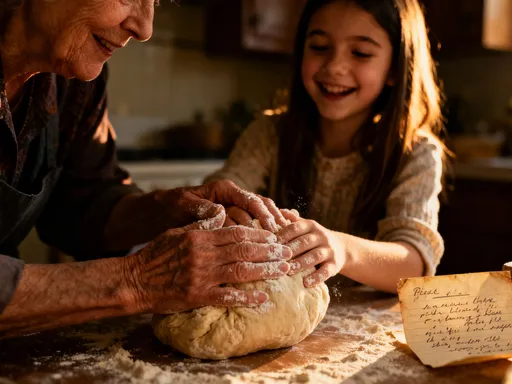
Here’s what changed everything: I stopped thinking of recipes as just instructions and started seeing them as stories. So I began adding more than measurements. For my grandmother’s chicken soup, I uploaded a photo of her hands stirring the pot, wrinkled and strong. I attached a voice note of her saying, “This is how you know it’s ready—when it warms you from the inside out.” I even scanned the original recipe card and included it, smudges and all.
One weekend, I asked my dad to record himself making his famous pancakes. He’s not a tech person, but he did it—holding his phone with one hand while flipping pancakes with the other. In the video, he laughs when one lands crooked. “That’s okay,” he says. “They still taste good.” That clip is now linked to the recipe. When my nephew makes them, he watches it first. He doesn’t just learn how to cook—he feels like his grandpa’s in the room.
My sister did something beautiful. She found an old drawing her daughter made as a child—a crayon sketch of “Mommy’s stew.” She uploaded it next to the recipe. Now, when we make that stew, someone always says, “Remember the drawing?” It’s become part of the tradition. These aren’t just digital extras—they’re emotional anchors. They turn a list of ingredients into a living, breathing memory.
And here’s the thing: you don’t need fancy equipment. A phone, a quiet moment, and a willingness to share—that’s all it takes. Record a parent explaining how they know when the bread is done. Take a photo of the chipped bowl they always use. Write down the joke they tell while chopping onions. These details don’t just make the recipe better—they make the connection stronger. The technology isn’t the star. It’s the stage for the people we love.
Making It a Family Ritual, Not a Chore
At first, I treated this like a project: “This weekend, I’ll upload three recipes.” But it felt like homework. The shift came when we stopped seeing it as a task and started making it part of our time together. We began scheduling monthly “recipe nights” over video call. One person would cook a family dish while others watched and asked questions. We’d laugh when someone forgot an ingredient or when the dog stole a piece of chicken off the counter.
Last summer, when my mom visited, we spent an afternoon going through her recipe box together. We scanned cards, took photos, and recorded her telling the story behind each one. “This cookie recipe? I got it from Mrs. Thompson next door in 1978. She was so kind when your dad was in the hospital.” That story had never been written down. Now it’s saved with the recipe. That afternoon wasn’t just about data entry—it was about presence. We were together, sharing memories, creating new ones.
We also started assigning small roles. My nephew is now the “voice note collector.” He asks grandparents to record tips when they visit. My niece is the “photo editor”—she picks the best shots of each dish. My sister handles organization, tagging recipes by holiday or season. It’s not perfect, and we don’t do it every week. But we do it enough. And because it’s tied to real moments—visits, holidays, phone calls—it feels natural, not forced.
The key? No pressure. No “you must contribute.” Just invitation. “Hey, want to record how you make those muffins?” “Can I upload your pie recipe with that story about the county fair?” When it’s part of the relationship, not a to-do list, it thrives.
Measuring What Matters: Stronger Bonds, Fewer Missed Moments
I used to measure success by how many recipes we’d saved. Now I measure it differently. How many times did my sister call me while cooking, just to hear my mom’s voice note on the soup recipe? How many times did my nephew say, “I made Grandpa’s pancakes today,” with a smile in his voice? How many stories have we uncovered that we never knew?
Last Christmas, we all made the same dish—my grandmother’s fruitcake, which no one really liked but everyone made out of tradition. This time, we followed the updated version in the app, with notes from three generations. My niece added her twist: bourbon-soaked cherries. We shared photos of our cakes, our messy kitchens, our dogs begging for crumbs. For the first time, it didn’t feel like a duty. It felt like a celebration.
And then there was the call from my cousin, who lives across the country. She’d been going through a hard time. One night, she decided to make my mom’s chicken and rice casserole—the one she used to bring over when Cousin was sick. She followed the recipe in the app, listened to my mom’s voice note: “This always makes things better.” She cried. Then she texted me: “I felt less alone.” That moment meant more than any perfectly organized digital archive.
This isn’t about perfection. Some recipes are still messy. Some voice notes are cut off. Some photos are blurry. But they’re real. And they’re ours. The technology didn’t fix our family—it gave us a way to see each other more clearly, to stay close even when we’re far apart. The real return on this investment isn’t in gigabytes or uploads. It’s in the quiet moments of connection, the laughter over burnt cookies, the comfort of hearing a familiar voice when you need it most.
Keeping It Alive for Generations to Come
I used to worry that these traditions would end with my generation. But now I see a different future. Last month, my 10-year-old goddaughter asked if she could add a recipe. She made “unicorn pasta”—rainbow noodles with pink sauce. She recorded herself singing a silly song while stirring the pot. We all saved it, right between Grandpa’s chili and Great-Aunt Mae’s cornbread.
That moment taught me something important: preservation isn’t about freezing the past. It’s about inviting the future in. We’re not just saving old recipes—we’re making space for new ones. We’re showing the younger generation that their voice matters, that their version of family belongs. And we’re giving them a gift: a living archive of love, laughter, and lasagna.
We’ve also built in small habits to keep it going. Every birthday, the birthday person adds a recipe. Every holiday, we review and update one old favorite. We back up the data regularly and share access with two family members, so it’s never lost. It’s not a one-time project. It’s an ongoing practice—like tending a garden. You don’t plant and walk away. You water, you prune, you celebrate the growth.
Someday, I hope a grandchild I may never meet will make my mom’s apple pie. I hope they read her note: “Use Granny’s crust—it holds the love better.” I hope they hear her voice, soft and sure, saying, “You’ve got this.” And I hope they feel, just for a moment, like they’re sitting at our kitchen table, surrounded by the people who came before them, all because we chose to press record, to click save, to say: this matters.
Technology doesn’t have to be cold or complicated. Sometimes, it’s just the quiet helper that lets us stay close. It won’t replace a hug or a shared meal. But it can extend them. It can carry our voices, our stories, our love—across miles, across years, across generations. And that, I’ve learned, is the most delicious thing of all.