I keep losing my place in books — How my e-reader finally solved it for good
Reading should be relaxing, not frustrating. Yet how many times have you dog-eared pages, only to lose your spot minutes later? Or carried around a heavy novel, wishing it fit in your pocket? I used to mutter, “I’ll remember where I stopped,” only to scroll endlessly later. Sound familiar? I felt the same—until I truly learned how to use my e-reader. It’s not just about going digital; it’s about making reading fit seamlessly into your life. No more clutter, no more excuses. Let me show you how.
I always lose my page — The small frustration that ruins reading joy
Let’s talk about something so small, yet so annoying: losing your place in a book. You’re finally settling in—knees pulled up on the couch, tea steaming beside you—and you pause for a moment to answer a text or stir dinner. You think, “I’ll remember where I was,” but when you come back, you’re flipping through pages, squinting at tiny print, trying to find that one sentence that made your heart skip. I’ve been there. I used to fold the corner of a page like it was a sacred ritual. Sometimes I’d use a grocery receipt, a napkin, or even a hair tie—anything to mark the spot. But those things fall out, get tossed, or blend into the chaos of everyday life.
And then there’s the guilt. That little voice whispering, “You love books, so why can’t you keep track?” Over time, those tiny frustrations pile up. They make reading feel like a chore instead of a comfort. I didn’t realize how much this was affecting me until I started using my e-reader’s bookmark feature. With just one tap, your place is saved—exactly where you left off. No guessing, no backtracking. It’s like the book holds your hand and says, “I’ve got you.” And if you want to mark a special line, you don’t need a pen or sticky note. Just highlight it. Later, you can go back and review all your highlights in one clean list. It’s simple, but it changed everything. Suddenly, reading felt light again. Effortless. Like it was supposed to.
I don’t have time to read — How built-in lighting and portability help you read anywhere
We all say we don’t have time to read, but the truth is, we just don’t have the right conditions. Life moves fast. Kids need snacks, dinner needs cooking, emails pile up. By the time the house is quiet, you’re too tired to focus. I used to think reading required the perfect moment—cozy lighting, silence, a full hour. But that moment never came. Then I discovered the magic of my e-reader’s front light. It’s not like a phone’s harsh glow. It’s soft, warm, and adjustable. I can read in bed while my husband sleeps beside me, and the light doesn’t disturb him at all. I’ve read for twenty minutes after lights out, feeling like I’m getting away with something wonderful.
And the best part? I take it everywhere. It’s thin, light, and fits in my purse like a phone. I used to lug around hardcover novels, only to leave them in the car or forget them at home. Now, my e-reader is always with me. I read in the doctor’s waiting room while scrolling through magazines feels like noise. I read during my lunch break instead of staring at my screen. I even read while waiting in the school pickup line, windows down, sun on my face. It’s become my quiet escape—one I don’t have to schedule or justify. Reading isn’t something I “find time for” anymore. It’s woven into my day, like brushing my teeth or making coffee. And that’s when I realized: I don’t need more time. I just needed a way to use the time I already have.
I forget what I read — Using notes and highlights to remember key moments
Here’s a secret I didn’t used to admit: I’d finish a book and realize I couldn’t remember much of it. I’d recall the ending, maybe a character’s name, but the beautiful lines, the ideas that made me pause—that all slipped away. I used to underline passages with a pencil, but those notes stayed trapped in a book on my shelf. If I wanted to revisit them, I’d have to hunt down the physical copy, flip through pages, hope I’d marked it clearly. Most of the time, I never did. The thoughts faded. The book closed. The moment passed.
My e-reader changed that. Now, when a sentence stops me in my tracks—when it makes me catch my breath or nod in quiet agreement—I tap it. I highlight it. And if I want to remember why it mattered, I add a note. Just a few words. “This is how I want to parent.” Or “This is exactly how I felt last spring.” Later, I can pull up a list of every highlight and note I’ve ever made. I’ve started sharing them with my daughter when she’s picking her next book. I’ve reread them on hard days, like little letters from my past self. It turns reading from a passive habit into a conversation—with the author, with the text, and with myself. It’s not just about remembering the book. It’s about remembering what it made me feel. And that’s something I carry with me long after the last page.
My books take up too much space — Decluttering your home with a digital library
I love books. I love the smell of them, the weight of them, the way they line my shelves like old friends. But I also love walking into a room and not feeling overwhelmed. For years, I struggled with this balance. My nightstand was a leaning tower of unread novels. My shelves groaned under the weight of collections I hadn’t touched in years. I’d buy a new book and immediately wonder, “Where will I put it?” It got to the point where I felt guilty for loving books because they were taking over my home.
Switching to an e-reader didn’t mean I stopped buying physical books—I still do, especially for gifts or special editions. But for my daily reading, digital freed me. Now, I carry hundreds of books in one slim device. I can switch from a mystery novel to a parenting guide to a memoir in seconds. I don’t have to decide which book to bring on vacation. They’re all there. And when I’m done, I don’t have to find shelf space. I just tap “archive,” and it’s stored in the cloud, ready whenever I want it. It’s not about rejecting paper books. It’s about choosing what works for your life right now. For me, that means less clutter, more access, and the freedom to read what I want, when I want, without worrying about square footage. My home feels calmer. My mind feels clearer. And I’m reading more than ever.
I never finish what I start — Using progress tracking to stay motivated
Let’s be honest: starting a book is exciting. Finishing one? Not so much. I used to get halfway through a novel, lose interest, and never go back. Sometimes I’d forget I was even reading it. Other times, life just got busy, and the book slipped through the cracks. I’d see it on my nightstand weeks later and feel a little stab of guilt. “I should finish that,” I’d tell myself. But I rarely did.
Then I noticed the progress bar on my e-reader. It’s subtle—just a small line at the bottom of the screen showing how far I’ve gotten. But it made a surprising difference. Seeing “42% complete” reminded me I wasn’t starting from zero. I’d already invested time and emotion. Why stop now? It became a quiet motivator, like a friend gently saying, “You’re doing great. Keep going.” And the “estimated reading time left” feature? That’s been a game-changer. Instead of staring at a mountain of pages, I see “25 minutes left.” That feels doable. I can read for 25 minutes while dinner simmers or before I get dressed in the morning. It turns “I’ll finish it someday” into “I’ll finish it today.” I’ve completed more books in the past year than I have in the last five. Not because I have more time, but because I have more momentum.
I can’t read in bright sunlight — Why modern e-readers work outdoors
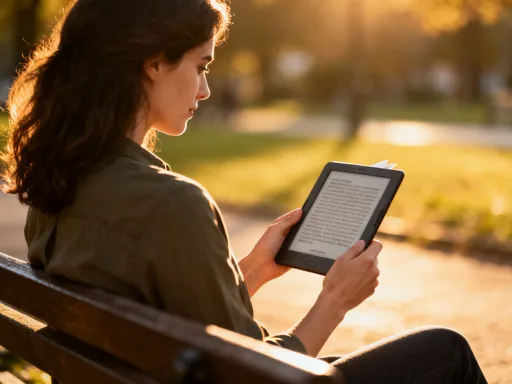
I used to think e-readers were indoor devices. I’d tried reading my phone outside and given up—too much glare, too hard on the eyes. So I assumed e-readers were the same. But I was wrong. When I first took my e-reader to the park, I was shocked. The screen was clear. Crisp. Like paper in sunlight. No squinting, no shadows, no tapping to adjust brightness every few seconds. I sat on a bench with my coffee and read for an hour, feeling the breeze and the warmth of the sun, completely absorbed.
The secret is e-ink technology. Unlike phones or tablets, e-readers don’t have a backlight that reflects sunlight. Instead, the screen reflects light like real paper, making it easier to read in bright conditions. I now look forward to sunny days as reading opportunities. I read on my porch in the morning. At the beach while my kids build sandcastles. Even in the backyard while dinner grills. It’s turned reading into a seasonal joy, not just a nighttime habit. And there’s something special about reading outside—how the words feel different when you’re surrounded by trees or sky. It’s like the story breathes with the world around you. I don’t have to choose between fresh air and a good book anymore. I can have both.
I want to read more, but I don’t know where to start — Building a reading habit that lasts
The truth is, I didn’t buy an e-reader to be trendy or high-tech. I bought it because I missed reading. I missed losing myself in a story, learning something new, feeling connected to other lives and ideas. But life had made it hard. Books were heavy. My eyes were tired. My time was fragmented. I needed a way to make reading fit into my real life—not some ideal version of it.
What I didn’t expect was how much more than convenience I’d gain. My e-reader didn’t just change how I read. It changed who I am. I’m more patient. More reflective. More present. When I read now, I’m not just passing time. I’m feeding my mind, my heart, my soul. And the best part? I do it without stress, without clutter, without guilt. I’ve built a habit that sticks because it works for me—because it’s easy, accessible, and joyful.
It started with small things: saving my place with a tap, reading in the five minutes I used to scroll online, highlighting a line that made me pause. But those small moments added up. Now, reading is part of my rhythm. It’s how I start the day. How I wind down. How I reconnect with myself. I’m not just reading more books. I’m living a richer life. And if you’ve ever thought, “I’d love to read more, but…”—I’m telling you, it’s possible. You don’t need more hours. You don’t need a perfect space. You just need a way to make reading work for you. And for me, that way was my e-reader. It didn’t replace my love for paper books. It deepened my love for reading itself. And that’s a gift I carry with me every single day.