Joined 3 Online Support Groups Last Year: Here’s How My Daily Routine Transformed
Ever feel like you're juggling life alone—work, family, meals, self-care—all while trying to stay sane? I did too. Then I found something unexpected: online support groups. Not just for crises, but for everyday struggles. They quietly reshaped how I communicate, plan, and connect. This isn’t about dramatic fixes; it’s about small, steady shifts that add up. Let me show you how these digital circles brought real clarity, comfort, and control to my daily life.
The Moment I Realized I Wasn’t Managing—Just Surviving
It was a Tuesday morning, the kind that starts with the alarm going off ten minutes too late. I spilled coffee on my favorite blouse, forgot to pack my daughter’s gym clothes, and missed an important work call because I was helping my son tie his shoes—again. By 9 a.m., I was already behind, and the to-do list on my phone mocked me with unchecked boxes. I had every app imaginable: calendar reminders, grocery planners, habit trackers. Yet, none of it helped me feel in control. I wasn’t falling apart, but I wasn’t thriving either. I was just… surviving. And honestly? I thought that was normal.
Then one afternoon, while scrolling through a parenting forum, I read a post that stopped me cold: 'Some days I don’t need solutions—I just need to know someone else feels this too.' That was it. That was exactly how I felt. Not broken, not dramatic—just unseen. The writer mentioned she was part of an online support group for working moms, a small, private community where people shared real struggles without judgment. I hesitated. Me? Join a group? I’m not the 'talk about my feelings' type, I told myself. But something about that post stayed with me. The next day, I clicked 'join.' No grand plan. Just curiosity. And honestly, a tiny hope that maybe, just maybe, I wouldn’t feel so alone.
What Online Support Groups Actually Are (And What They’re Not)
Let’s clear the air—online support groups aren’t therapy. They’re not a place to diagnose or fix deep emotional wounds. And they’re definitely not those loud, chaotic comment sections where everyone shouts over each other. What they *are* is more like a digital kitchen table—a quiet corner online where people who get your life come together to share, listen, and encourage.
Most of the groups I’ve joined are built around shared experiences: working parents, women managing stress, people trying to stay active with busy schedules. They live on trusted platforms with real moderation—no spam, no weird ads, no strangers dropping in. Members agree to basic rules: be kind, respect privacy, no unsolicited advice. Some groups have weekly check-ins, others use simple forums where you post when you feel like it. There’s no pressure to perform, no need to be 'on' all the time. You can read without commenting, post once a month, or jump into daily chats—whatever works for you.
What surprised me most was how safe it felt. I expected awkwardness, maybe even judgment. Instead, I found warmth. One group I joined had a simple welcome message: 'You don’t have to earn your place here. You’re already enough.' That changed everything. I realized these weren’t places for fixing yourself—they were spaces for remembering who you already are, especially when life makes you forget.
From Passive Reading to Real Conversations: How Communication Changed
At first, I did what a lot of new members do—I lurked. I read every post, absorbed every tip, but didn’t say a word. It felt safer that way. Then one evening, someone shared a simple question: 'How’s your week going? No need to write a novel—just one word if that’s all you’ve got.' I paused. One word? I typed 'tired.' Hit send. And then—someone replied: 'Thank you for saying that. Me too.' Just that. No fix, no pep talk. Just acknowledgment.
That tiny exchange cracked something open. Over time, I started replying more. I shared a frustration about bedtime routines. I asked for help with meal ideas. And slowly, I noticed something unexpected: I was becoming a better listener—in real life. At dinner, instead of mentally planning tomorrow’s schedule while my kids talked, I actually heard them. I caught the little things—my daughter’s excitement about her science project, my son’s quiet worry about a friend. I stopped interrupting as much. I started asking, 'How did that make you feel?' not because I read it in a parenting book, but because I’d seen others ask it online and felt how powerful it was.
The shift wasn’t overnight, but it was real. The more I practiced being present in the group, the more I showed up that way at home. I wasn’t just managing conversations—I was connecting through them. And that made all the difference.
Turning Shared Tips into Daily Habits
One of the most practical gifts these groups gave me was something I never expected: usable, real-life systems. Not perfect, not complicated—just simple ideas from people who live the same chaos I do. Like the night I read a post about a '10-minute evening reset.' The woman wrote: 'Before bed, I spend 10 minutes tidying the kitchen, writing down one good thing from the day, and glancing at tomorrow’s calendar. It’s not magic—but it helps me sleep.' I tried it the next night. And the night after. Now, it’s my ritual.
Then there was the meal-prep grid someone shared—a simple table with dinner ideas for the week, color-coded by prep time. I adapted it to our family’s tastes and allergies. Now, Sunday evenings are calm. I open the document, check the fridge, and plan without stress. The beauty wasn’t the tool itself—it was the story behind it. She didn’t say, 'This will change your life.' She said, 'It took me three tries to stick with it. Be kind to yourself if you miss a day.' That made it feel doable. Human.
These weren’t apps with pushy notifications or complicated rules. They were peer-tested, empathy-informed habits—shared because someone cared enough to say, 'This worked for me. Maybe it’ll help you too.' And because they came with grace, not guilt, I actually stuck with them. That’s the power of lived experience over generic advice.
Building Accountability Without Pressure
I’ve never liked accountability partners who check in like drill sergeants: 'Did you do your workout? Why not?' It always made me shut down. But the way accountability works in these groups is different. It’s gentle. It’s optional. It’s based on sharing, not reporting.
In one group, every Sunday, members post a simple intention: 'This week, I’ll try to walk three times,' or 'I want to sleep by 11 p.m. at least four nights.' No one grades you. No one shames you if you don’t make it. But something powerful happens when you write your goal down and share it with people who care. You feel seen. And when someone comments, 'You’ve got this,' or 'I’m trying that too,' it creates a quiet sense of commitment.
I started small. My first intention was, 'I’ll drink more water.' Simple. Achievable. And when I saw others cheering me on, I wanted to follow through—not because I had to, but because I felt supported. Over time, I took on bigger goals: 'I’ll unplug from work by 7 p.m.,' 'I’ll read for 15 minutes before bed.' The group didn’t pressure me. But their quiet presence—reading my updates, celebrating small wins—made me want to keep going. It wasn’t about perfection. It was about progress, witnessed with kindness.
The Ripple Effect on Family and Self
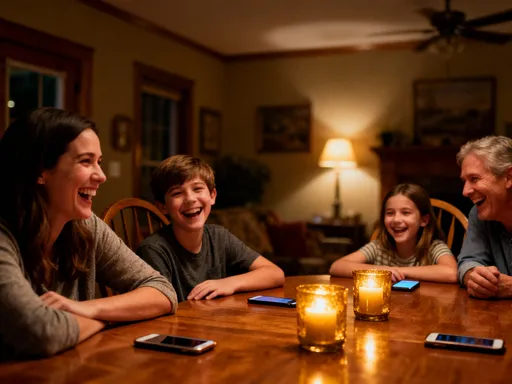
The changes didn’t stay online. They seeped into my days, my mood, my home. I noticed it first in little moments. Like the evening I sat at the dinner table and actually finished my meal—without rushing to clean up, without checking my phone. My kids were laughing about something silly, and instead of mentally drafting my to-do list, I just… listened. Really listened. And my husband caught my eye and smiled, like he was noticing it too.
Or the morning I didn’t snap when my daughter spilled her juice. I took a breath, handed her a cloth, and said, 'It’s okay. Accidents happen.' That calm response? That wasn’t me from a year ago. That was the version of me who’d learned, slowly, how to pause—because someone online once said, 'Before you react, try counting to three. It’s not about being perfect. It’s about being present.'
My kids didn’t say, 'Mom’s changed.' But they acted differently. They came to me more. They shared more. My youngest started saying, 'Can we talk?' instead of shutting his door. And my husband said, 'You seem lighter lately.' I didn’t feel fixed. I felt found. Like I’d remembered how to be me, even in the middle of everything.
How to Find and Join the Right Group (Without Feeling Overwhelmed)
If you’re curious, I get it. The idea of joining an online group can feel like adding one more thing to your plate. But it doesn’t have to be that way. Start small. Look for groups hosted on trusted platforms—nonprofit organizations, health centers, or well-known community sites with clear moderation. Avoid anything that feels salesy or overly intense. A good group should feel like a warm porch light—not a flashing neon sign.
Look for clear focus: 'Support for working parents,' 'Women building daily routines,' 'Mindful living for busy lives.' Read a few posts before joining. Does the tone feel kind? Are people respectful? Is there moderation? These matter. When you join, it’s okay to just observe at first. Read. Absorb. See how it feels. You don’t owe anyone a big introduction or a dramatic story. You can post when you’re ready—or never, if that’s what you prefer.
And if a group doesn’t feel right? Leave. No guilt. No explanation. Your peace is more important than politeness. I left one group because the energy felt too negative. Another felt too pushy about productivity. That’s okay. This isn’t about joining every group—it’s about finding one that fits *your* life, your pace, your heart. For me, three groups felt right: one for working moms, one for simple wellness habits, and one for mindful communication. Each plays a different role, like tools in a toolbox I can reach for when I need them.
These groups didn’t solve all my problems. But they gave me something better: connection, clarity, and the quiet courage to keep going. They reminded me that I’m not behind. I’m not failing. I’m learning, growing, and showing up—day by day. And sometimes, that’s enough. If you’ve ever felt alone in your daily grind, I hope you’ll consider giving one a try. Not because you’re broken, but because you deserve support. Not because you need fixing, but because you’re worth the care. The digital world gets a bad rap sometimes, but in these quiet corners, I found something real: a community that helped me live a little more fully, one small step at a time.